

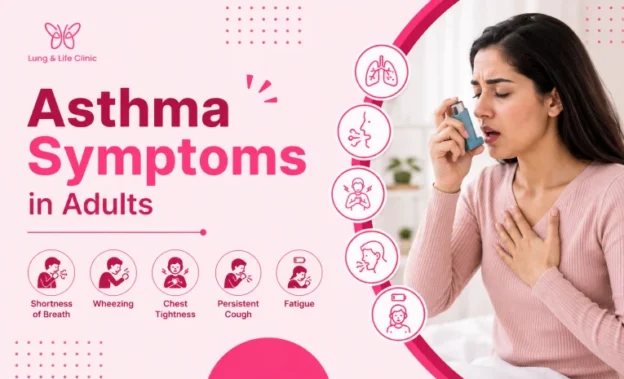
Asthma Symptoms in Adults can vary from mild and occasional to severe and persistent. Asthma is a chronic inflammatory disease of the airways that causes the breathing passages to become swollen, narrow, and filled with excess mucus, making it difficult to breathe. The condition often develops gradually, and symptoms may worsen at night, during exercise, after exposure to allergens, or during respiratory infections. Recognizing the early signs of asthma can help prevent severe attacks and improve long-term lung health.
What Is Asthma?
Asthma is a chronic lung disease that causes inflammation and narrowing of the airways, making it difficult to breathe. It can lead to symptoms such as wheezing, coughing, chest tightness, and shortness of breath. Asthma symptoms may come and go and are often triggered by allergens, exercise, cold air, or respiratory infections. Although there is no cure, asthma can be effectively managed with proper medication and lifestyle changes.
Asthma Types
Asthma is classified into different types based on its cause, triggers, severity, and when the symptoms occur, helping doctors choose the most effective treatment.
- Allergic Asthma: Triggered by allergens such as pollen, dust mites, pet dander, mold, and cockroaches.
- Non-Allergic Asthma: Caused by cold air, stress, smoke, respiratory infections, or strong odors rather than allergies.
- Adult-Onset Asthma: Develops after the age of 20 and is often more persistent than childhood asthma.
- Childhood Asthma: Begins during childhood and may improve or continue into adulthood.
- Exercise-Induced Asthma: Symptoms occur during or after physical activity, causing wheezing, coughing, and breathlessness.
- Occupational Asthma: Triggered by exposure to chemicals, dust, fumes, gases, or other workplace irritants.
- Seasonal Asthma: Symptoms worsen during certain seasons due to pollen, humidity, or weather changes.
- Nocturnal Asthma: Symptoms become more severe at night, often disturbing sleep.
- Severe Asthma: A difficult-to-control form that requires high-dose medications or biologic therapies despite regular treatment.
- Cough-Variant Asthma: The primary symptom is a persistent dry cough, with little or no wheezing.
Asthma Symptoms in Adults
Asthma symptoms in adults occur when the airways become inflamed, swollen, narrowed, and filled with excess mucus, making it difficult for air to move in and out of the lungs. Symptoms may appear daily, occasionally, or only after exposure to specific triggers such as allergens, exercise, cold air, smoke, or respiratory infections.
- Shortness of Breath: Feeling breathless or unable to get enough air, especially during physical activity or at night.
- Chronic Cough: A persistent cough, often dry, that is usually worse at night, early morning, or after exercise.
- Wheezing: A high-pitched whistling sound while breathing, particularly during exhalation.
- Chest Tightness: A feeling of pressure, heaviness, or constriction in the chest that can make breathing uncomfortable.
- Difficulty Breathing During Exercise: Experiencing breathlessness, coughing, or wheezing during or after physical activity.
- Nighttime Symptoms: Frequent coughing, wheezing, or shortness of breath that disrupts sleep.
- Rapid Breathing: Breathing faster than normal during asthma flare-ups due to reduced airflow.
- Excess Mucus Production: Increased mucus in the airways, leading to throat clearing and coughing.
- Fatigue: Feeling tired or low in energy because the body receives less oxygen and sleep is disturbed.
- Difficulty Speaking: During severe episodes, it may become hard to speak in full sentences due to breathlessness.
- Symptoms Triggered by Allergens or Irritants: Exposure to dust, pollen, pet dander, smoke, strong odors, pollution, or cold air can worsen symptoms.
- Frequent Respiratory Infections: Asthma symptoms may become more severe during or after colds, flu, or other respiratory infections.
Asthma Causes
Asthma develops due to a combination of genetic, environmental, and lifestyle factors that cause chronic inflammation and increased sensitivity of the airways. While the exact cause varies from person to person, certain risk factors and triggers can increase the likelihood of developing asthma or worsening its symptoms.
- Genetics: A family history of asthma, allergies, or eczema increases the risk of developing asthma.
- Allergies: Exposure to pollen, dust mites, mold, pet dander, and cockroaches can trigger allergic asthma.
- Respiratory Infections: Viral infections such as the common cold, flu, or RSV can inflame the airways and trigger asthma symptoms.
- Air Pollution: Breathing polluted air, vehicle emissions, and industrial smoke can worsen airway inflammation.
- Smoking: Active smoking and exposure to secondhand smoke significantly increase the risk of asthma and severe attacks.
- Occupational Exposure: Contact with chemical fumes, dust, paints, cleaning agents, flour dust, or industrial gases at work can cause occupational asthma.
- Exercise: Intense physical activity, especially in cold or dry air, may trigger exercise-induced asthma.
- Cold Air and Weather Changes: Sudden temperature changes or breathing cold, dry air can cause airway narrowing.
- Strong Odors and Chemicals: Perfumes, air fresheners, cleaning products, paints, and chemical fumes may trigger symptoms.
- Obesity: Excess body weight can increase inflammation and place additional strain on the lungs, raising the risk of asthma.
- Hormonal Changes: Hormonal fluctuations during pregnancy, menopause, or the menstrual cycle may contribute to asthma symptoms in some adults.
- Stress and Anxiety: Emotional stress and anxiety can worsen asthma symptoms by affecting breathing patterns.
- Gastroesophageal Reflux Disease (GERD): Acid reflux can irritate the airways and trigger coughing and asthma flare-ups.
Diagnosis and Tests of Asthma
Diagnosing asthma involves evaluating your symptoms, medical history, family history, and lung function. A healthcare provider may perform several tests to confirm asthma, rule out other respiratory conditions, and determine the severity of the disease.
- Medical History: The doctor asks about breathing difficulties, coughing, wheezing, chest tightness, allergies, smoking history, and family history of asthma.
- Physical Examination: A physical exam includes listening to the lungs with a stethoscope and checking for signs of allergies or other respiratory conditions.
- Spirometry: The most common lung function test, which measures how much air you can breathe in and out and how quickly you exhale.
- Peak Expiratory Flow (PEF) Test: Measures how fast you can blow air out of your lungs, helping monitor asthma severity and control.
- Bronchodilator Reversibility Test: Spirometry is repeated after using a bronchodilator (rescue inhaler) to see if lung function improves, which supports an asthma diagnosis.
- Fractional Exhaled Nitric Oxide (FeNO) Test: Measures the level of nitric oxide in exhaled breath, which indicates airway inflammation.
- Methacholine Challenge Test: Used when routine lung function tests are normal but asthma is still suspected. The test checks whether the airways become overly sensitive after inhaling methacholine.
- Allergy Testing: Skin prick tests or blood tests help identify allergens such as pollen, dust mites, mold, or pet dander that may trigger asthma.
- Blood Tests: May be performed to check for allergic inflammation, elevated eosinophil levels, or to rule out other conditions.
- Chest X-ray: Helps exclude other lung diseases, such as pneumonia, chronic obstructive pulmonary disease (COPD), or lung infections.
- CT Scan (if needed): Recommended in selected cases to evaluate structural abnormalities or other lung conditions.
- Exercise Challenge Test: Assesses whether physical activity triggers asthma symptoms, helping diagnose exercise-induced asthma.
- Pulse Oximetry: Measures the oxygen level in the blood, especially during an asthma attack or severe breathing difficulty.
- Sputum Examination: In some cases, mucus is analyzed to detect eosinophils or signs of infection.
Asthma Management and Treatment
Asthma cannot be cured, but it can be effectively managed with the right medications, regular monitoring, and lifestyle changes. The goal of treatment is to control symptoms, prevent asthma attacks, maintain normal lung function, and help individuals lead an active, healthy life.
Medications for Asthma
- Quick-Relief (Rescue) Inhalers: Provide rapid relief during an asthma attack by relaxing the airway muscles. These are used only when symptoms occur.
- Inhaled Corticosteroids (ICS): The first-line long-term treatment that reduces airway inflammation and helps prevent asthma symptoms.
- Long-Acting Beta-Agonists (LABAs): Help keep the airways open for longer periods and are usually prescribed along with inhaled corticosteroids.
- Combination Inhalers: Contain both an inhaled corticosteroid and a long-acting bronchodilator for better long-term asthma control.
- Leukotriene Modifiers: Oral medications that help reduce airway inflammation and prevent asthma symptoms.
- Biologic Therapies: Injectable medications used to treat severe asthma that does not respond to standard treatments.
- Oral Corticosteroids: Short courses may be prescribed during severe asthma flare-ups to reduce inflammation.
Also Read: Ayurvedic Medicine for Sleep
Lifestyle and Self-Care Measures
- Avoid Triggers: Stay away from dust, pollen, smoke, pet dander, mold, strong perfumes, and air pollution whenever possible.
- Quit Smoking: Smoking and secondhand smoke can significantly worsen asthma symptoms.
- Maintain a Healthy Weight: Achieving a healthy body weight can improve breathing and reduce asthma severity.
- Exercise Regularly: Engage in doctor-approved physical activity to improve lung function while taking precautions if exercise triggers symptoms.
- Manage Allergies: Treating allergies can help reduce asthma flare-ups.
- Prevent Respiratory Infections: Practice good hygiene and stay up to date with recommended vaccinations to lower the risk of infections that may trigger asthma.
- Reduce Stress: Managing stress and anxiety through relaxation techniques or counseling may help reduce asthma symptoms.
- Use Inhalers Correctly: Proper inhaler technique ensures the medication reaches the lungs effectively.
- Monitor Symptoms: Keep track of symptoms or use a peak flow meter if recommended by your healthcare provider.
- Follow an Asthma Action Plan: Work with your doctor to create a personalized plan that outlines daily treatment and what to do during worsening symptoms.
Asthma Symptoms in Adults FAQs
1. What are the common symptoms of asthma in adults?
The most common symptoms include shortness of breath, wheezing, chronic cough, chest tightness, rapid breathing, and difficulty breathing during exercise or at night.
2. Can adults develop asthma later in life?
Yes, adult-onset asthma can develop at any age, even if you never had asthma as a child. It is often more persistent and may require long-term treatment.
3. What triggers asthma symptoms in adults?
Common triggers include allergens, dust mites, pollen, pet dander, smoke, air pollution, respiratory infections, cold air, exercise, stress, and strong chemical odors.
4. How is asthma diagnosed?
Doctors diagnose asthma using medical history, physical examination, spirometry, peak flow testing, allergy tests, FeNO testing, and other lung function tests.
5. Is asthma curable?
No, asthma cannot be cured, but it can be effectively managed with medications, avoiding triggers, and following an asthma action plan.
6. Can asthma symptoms be worse at night?
Yes. Many people experience nighttime asthma, where coughing, wheezing, and shortness of breath worsen during sleep or in the early morning hours.