
Short Answer
Chronic lung disease refers to long-term conditions that affect breathing, including asthma, chronic obstructive pulmonary disease (COPD), and certain interstitial lung diseases (ILD). Six warning signs include a persistent cough, breathlessness, wheezing, chest tightness, frequent chest infections, and unexplained tiredness. Early diagnosis and appropriate treatment can help manage symptoms and improve quality of life. Daily care includes taking prescribed medicines, avoiding smoke and pollution, staying physically active as advised, and attending regular check-ups with a pulmonologist.
Introduction
Healthy lungs are essential for comfortable breathing and everyday activities. However, respiratory conditions can affect the airways, lung tissue, or the lining surrounding the lungs, making breathing difficult.
Some lung conditions persist for months or years and require ongoing medical care. Smoking, air pollution, occupational dust, respiratory infections, and genetic factors can contribute to different lung diseases.
Recognising the warning signs early can help you seek medical advice before symptoms significantly affect your daily life.
Dr. Utkarsh Gupta, Consultant in Pulmonology and Sleep Medicine, holds an MBBS and an MD in Respiratory Medicine, along with a Fellowship in Sleep Medicine. At Lung & Life Clinic, he provides specialist evaluation and care for a range of respiratory conditions, including asthma, COPD, tuberculosis, interstitial lung disease, and pleural diseases.
What Is Chronic Lung Disease?
Chronic lung disease refers to long-term respiratory conditions that affect the lungs and airways. These conditions can cause persistent symptoms such as coughing, wheezing, mucus production, and breathlessness.
Common chronic respiratory conditions include:
- Asthma: A condition involving airway inflammation and narrowing that can cause wheezing, coughing, and breathlessness.
- Chronic Obstructive Pulmonary Disease (COPD): A chronic lung condition that restricts airflow and makes breathing difficult.
- Interstitial Lung Disease (ILD): A group of disorders affecting lung tissue. Some types cause inflammation and scarring that can impair lung function.
- Chronic Bronchitis: A condition characterised by persistent cough and mucus production, often associated with COPD.
- Pleural Diseases: Conditions affecting the lining around the lungs, including pleural effusion and pneumothorax.
Other respiratory problems, such as pneumonia, tuberculosis, and lung cancer, may also require specialist pulmonary care, although they are not all classified as chronic lung diseases.
6 Warning Signs of Chronic Lung Disease
1. A Persistent Cough
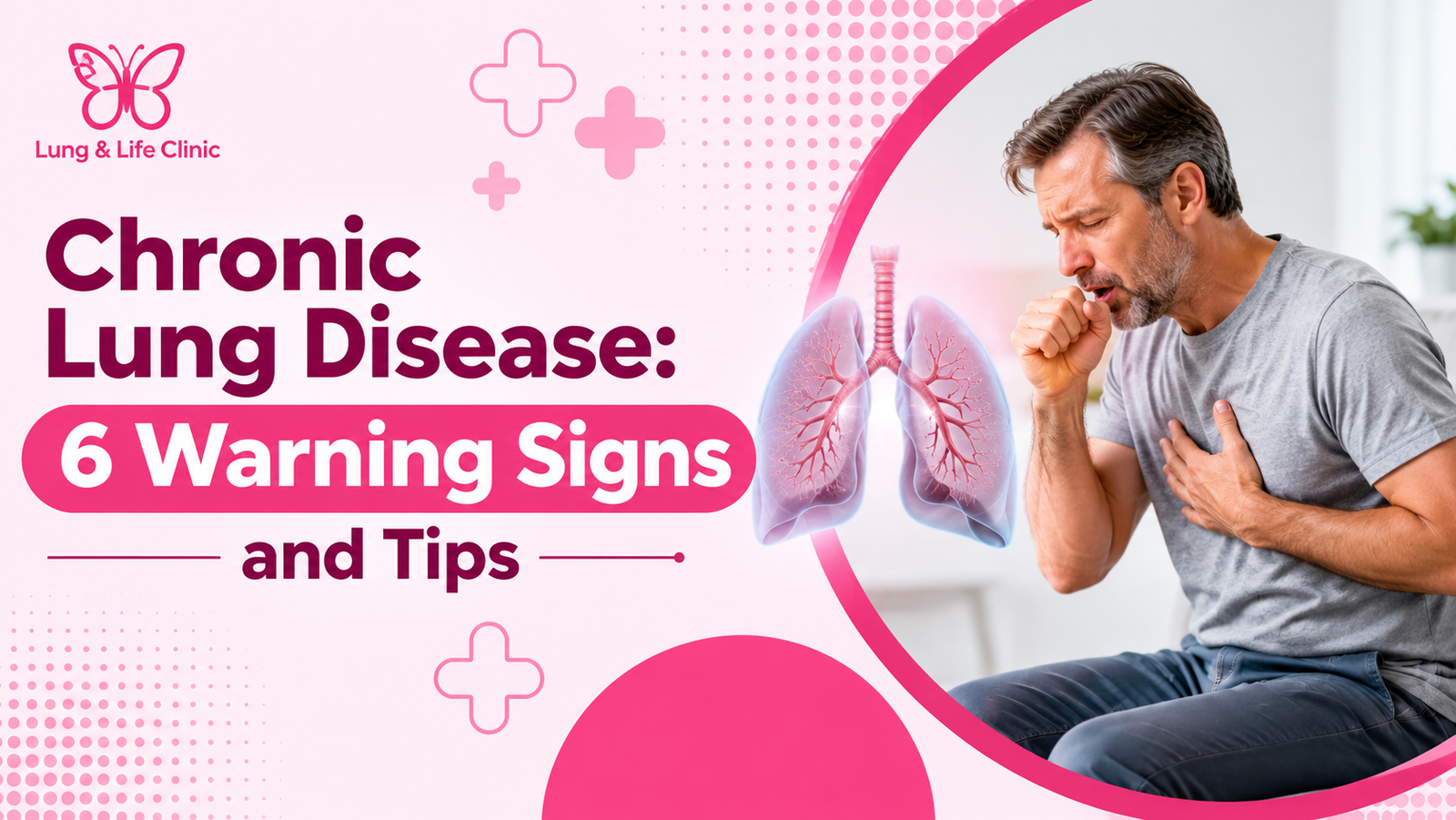
A cough that continues for two weeks or longer, keeps returning, or gradually worsens should not be ignored. Persistent coughing can occur with asthma, COPD, respiratory infections, and other conditions.
If your cough is accompanied by blood in the sputum, unexplained weight loss, fever, or worsening breathlessness, seek medical evaluation promptly.
2. Breathlessness During Everyday Activities
Do you become breathless while climbing stairs, walking short distances, or performing routine household activities?
Persistent or unexplained breathlessness may indicate an underlying respiratory or cardiovascular problem. Some people gradually reduce their physical activity without realising that their breathing has changed.
Consult a doctor if you notice that activities you previously managed comfortably are becoming difficult.
3. Wheezing or Chest Tightness
Wheezing is a whistling sound produced when air moves through narrowed airways. Chest tightness may occur alongside wheezing, coughing, or difficulty breathing.
These symptoms are common in asthma and can also occur in COPD and other respiratory conditions. A pulmonologist can evaluate the symptoms and recommend appropriate investigations and treatment.
4. Frequent Chest Infections
Repeated respiratory infections or prolonged recovery after an infection may indicate an underlying lung problem.
Conditions such as COPD, bronchiectasis, and certain immune system disorders can increase the risk of recurrent chest infections.
If you frequently experience chest infections, discuss your symptoms with a healthcare professional to identify possible causes and determine whether further testing is needed.
5. Unexplained Tiredness or Poor Sleep
Persistent fatigue can develop when breathing difficulties interfere with sleep or make everyday activities more demanding.
Loud snoring, interrupted sleep, and excessive daytime sleepiness may also indicate a sleep disorder such as obstructive sleep apnea.
If you regularly wake up feeling unrefreshed or struggle with daytime tiredness, seek medical advice to determine the cause.
6. Chest Pain or Blood in Sputum
Chest pain and coughing up blood should never be ignored. These symptoms can occur with infections, tuberculosis, pleural diseases, and other serious conditions, including lung cancer.
Seek prompt medical assessment if you notice blood in your sputum or experience unexplained chest pain. Severe chest pain, significant bleeding, or sudden difficulty breathing requires emergency medical attention.
How Is Chronic Lung Disease Diagnosed?
A pulmonologist evaluates your symptoms, medical history, exposure to smoking or pollution, and physical examination findings before recommending appropriate tests.
Depending on the suspected condition, investigations may include:
- Pulmonary Function Test (PFT): Measures how well your lungs move air and how effectively they function.
- Chest X-ray: Helps identify certain lung abnormalities, infections, and other chest conditions.
- Allergy and Asthma Testing: May help identify allergic triggers or support the evaluation of suspected asthma.
- Additional Investigations: CT scans, blood tests, or other investigations may be recommended when clinically necessary.
- Bronchoscopy or EBUS: These procedures may be advised for selected patients when further examination or tissue sampling is required.
Not every patient needs every test. The appropriate investigations depend on the symptoms, examination findings, and suspected diagnosis.
Daily Management Tips for Chronic Lung Disease
1. Take Medicines as Prescribed
Follow your prescribed treatment plan and use inhalers correctly. Do not stop or change your medicines without consulting your doctor, even if your symptoms improve.
Ask your healthcare professional to check your inhaler technique during follow-up appointments.
2. Avoid Smoking and Respiratory Irritants
Smoking can worsen respiratory symptoms and contribute to lung damage. Quitting smoking is an important step in protecting your lung health.
Whenever possible, avoid second-hand smoke, heavy pollution, dust, and chemical fumes. Use appropriate respiratory protection when exposure to occupational dust or irritants cannot be avoided.
3. Stay Active and Consider Pulmonary Rehabilitation
Physical activity, within your individual limits, can help maintain strength and improve general fitness.
Pulmonary rehabilitation is a structured programme that may include supervised exercise, breathing techniques, education, and support for managing everyday activities.
For suitable patients with COPD and certain other chronic respiratory conditions, rehabilitation can improve exercise capacity, help manage breathlessness, and enhance quality of life.
4. Practise Recommended Breathing Techniques
Breathing techniques may help some people manage breathlessness during daily activities.
For example, pursed-lip breathing involves inhaling gently through the nose and exhaling slowly through partially closed lips.
Ask your doctor or respiratory therapist whether this technique is appropriate for your condition and how to practise it correctly.
5. Eat a Balanced Diet and Maintain Healthy Sleep Habits
Good nutrition helps maintain muscle strength and overall health. Choose a balanced diet that provides adequate protein, vitamins, minerals, and energy.
If large meals make you uncomfortable or breathless, smaller meals may be easier to manage. Maintain a regular sleep schedule and discuss persistent snoring or daytime sleepiness with your doctor.
6. Monitor Symptoms and Attend Follow-Up Appointments
Keep track of changes in your breathing, cough, sputum, activity levels, and sleep quality.
Attend regular follow-up appointments and complete lung function tests or other investigations when recommended.
Seek medical advice if your symptoms worsen or your prescribed treatment no longer provides adequate relief.
When Should You Seek Urgent Medical Care?
Some respiratory symptoms require immediate attention.
Seek emergency medical care if you experience:
- Severe or sudden breathlessness.
- Bluish lips or skin.
- Severe chest pain.
- Confusion associated with breathing difficulties.
- Significant coughing up of blood.
Do not delay emergency care while waiting for a routine appointment.
Conclusion
Chronic lung disease can affect breathing, sleep, physical activity, and overall quality of life. Recognising persistent symptoms early and receiving an appropriate diagnosis can help you manage your condition more effectively.
Following your prescribed treatment, avoiding smoking and respiratory irritants, maintaining suitable physical activity, and attending regular check-ups are important parts of long-term respiratory care.
If you experience persistent coughing, wheezing, breathlessness, or recurring chest infections, consult a qualified pulmonologist for an individual assessment.
Dr. Utkarsh Gupta provides specialist care for respiratory conditions at Lung & Life Clinic. To enquire about an appointment, call +91 7303600551.
Frequently Asked Questions (FAQs)
Q1. What is chronic lung disease?
Ans. Chronic lung disease refers to long-term conditions affecting the lungs or airways, such as asthma, COPD, and certain types of interstitial lung disease. These conditions may cause persistent coughing, wheezing, or breathlessness.
Q2. What are the early warning signs of chronic lung disease?
Ans. Common warning signs include a persistent cough, breathlessness, wheezing, chest tightness, frequent chest infections, and unexplained tiredness. These symptoms can have other causes, so medical assessment is important.
Q3. Can chronic lung disease be cured?
Ans. Treatment depends on the specific condition. Some chronic lung diseases can be controlled effectively, while others may require long-term management. Appropriate treatment can help relieve symptoms and improve quality of life.
Q4. Which doctor treats chronic lung disease?
Ans. A pulmonologist specialises in diagnosing and managing respiratory conditions, including asthma, COPD, interstitial lung disease, tuberculosis, and pleural diseases.
Q5. Does pulmonary rehabilitation help people with chronic lung disease?
Ans. Yes. For suitable patients, pulmonary rehabilitation can improve exercise capacity, help manage breathlessness, and support daily activities. It commonly includes supervised exercise, breathing techniques, and education.